📊 Stats & Trend
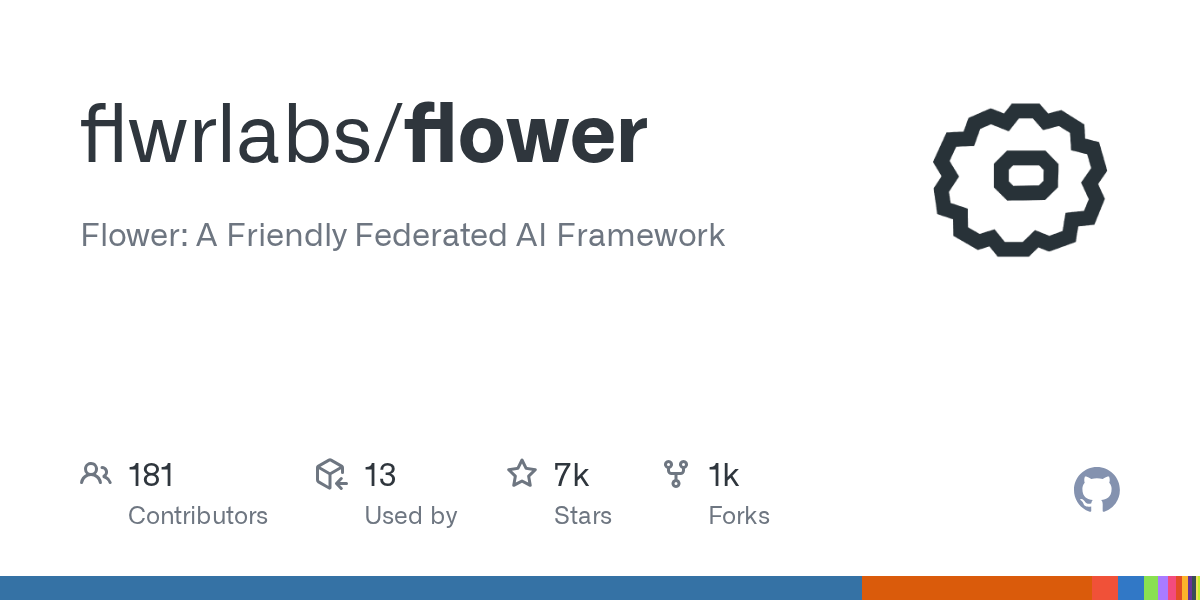
| ⭐ Stars (total) | 6,750 |
| 📈 Star Growth (Mar 19 → Mar 26) | +6,750 |
| 🔥 Star Growth (Mar 25 → Mar 26) | +6,750 |
| 📈 Trend | Trending |
| 📊 Trend Score | 5400 |
| 💻 Stack | Python |
Overview
Flower is experiencing explosive growth with +6,750 stars gained this week, positioning itself as a leading framework for federated artificial intelligence. This Python-based tool focuses on making federated learning accessible and developer-friendly, addressing the growing need for privacy-preserving AI training across distributed datasets.
Key Features
• Framework-agnostic design supporting PyTorch, TensorFlow, Hugging Face, and other ML libraries
• Built-in support for heterogeneous client environments and varying computational capabilities
• Simulation capabilities for testing federated learning scenarios locally before deployment
• Flexible aggregation strategies including FedAvg, FedOpt, and custom algorithms
• Privacy-preserving techniques with differential privacy integration
• Production-ready deployment tools with Docker and Kubernetes support
Use Cases
• Healthcare institutions training AI models on patient data without sharing sensitive information across hospitals
• Financial services companies building fraud detection models while keeping customer data localized
• Mobile app developers creating personalized AI features that learn from user behavior without compromising privacy
• Research organizations conducting large-scale machine learning experiments across multiple institutions
• IoT device manufacturers implementing edge AI that improves through federated learning across device fleets
Why It’s Trending
This tool gained +6,750 stars this week, showing strong momentum in AI Tools. This suggests increasing developer interest in federated learning approaches as privacy regulations tighten globally. This trend may reflect a broader shift in how teams are building with AI, prioritizing data privacy and distributed training over centralized model development.
Pros
• Comprehensive framework that works with existing ML stacks without requiring major code rewrites
• Strong emphasis on simulation and testing capabilities for validating federated scenarios
• Active community development with regular updates and extensive documentation
• Production-ready features including monitoring, logging, and deployment automation
Cons
• Steeper learning curve for developers unfamiliar with federated learning concepts
• Network communication overhead can impact training performance compared to centralized approaches
• Limited ecosystem of third-party plugins and extensions compared to traditional ML frameworks
Pricing
Free and open source under Apache 2.0 license.
Getting Started
Install via pip and follow the quickstart tutorial to set up a basic federated learning simulation. The framework includes comprehensive examples for common scenarios like federated image classification and natural language processing.
Insight
The dramatic growth in Flower’s popularity suggests that privacy-preserving AI is transitioning from academic research to practical implementation. This momentum is likely driven by increasing regulatory pressure around data privacy and the growing recognition that federated learning can unlock valuable insights from previously inaccessible datasets. The timing indicates that organizations may be actively seeking alternatives to traditional centralized AI training approaches.


Comments