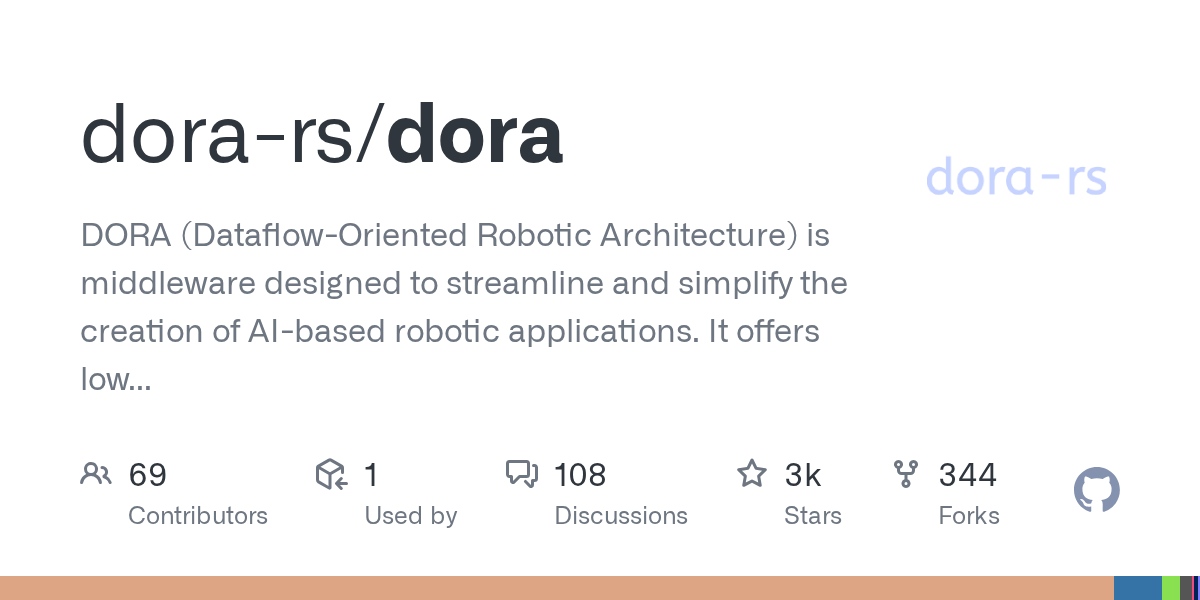
📊 Stats & Trend
| ⭐ Stars | 3,072 |
| 📈 Weekly Growth | +3,072 |
| 🔥 Today Growth | +3,072 |
| 📈 Trend | Trending |
| 📊 Trend Score | 2458 |
| 💻 Stack | Rust |
Overview
DORA (Dataflow-Oriented Robotic Architecture) is a Rust-based middleware for building AI robotics applications through composable dataflow pipelines. With +3,072 stars gained this week, it’s capturing significant attention in the robotics development community by offering a graph-based approach to modeling robotic applications with low-latency, distributed capabilities.
Key Features
• Graph-based application modeling where robotics apps are structured as directed pipelines
• Low-latency dataflow processing optimized for real-time robotic operations
• Distributed architecture enabling multi-node robotic system coordination
• Composable middleware design allowing modular component integration
• Rust implementation providing memory safety and performance benefits
• Dataflow-oriented paradigm simplifying complex robotic application development
Use Cases
• Autonomous vehicle systems requiring real-time sensor data processing and decision-making pipelines
• Industrial robotic arms coordinating multiple actuators and sensors through distributed dataflows
• Drone swarm coordination where multiple units need low-latency communication and synchronized behavior
• Research robotics projects testing AI algorithms across modular, reusable pipeline components
• Multi-robot warehouse automation systems managing coordinated picking and navigation tasks
Why It’s Trending
This tool gained +3,072 stars this week, showing strong momentum in AI Infrastructure. This suggests increasing developer interest in dataflow-oriented approaches to robotics development, moving beyond traditional imperative programming models. This trend may reflect a broader shift toward more composable, distributed architectures as robotics applications become increasingly complex and AI-driven.
Pros
• Rust foundation provides memory safety and high performance critical for robotics applications
• Graph-based modeling offers intuitive visualization and debugging of complex robotic behaviors
• Distributed architecture scales from single robots to multi-agent systems
• Low-latency design addresses real-time requirements essential in robotics applications
Cons
• Rust learning curve may limit adoption among robotics developers more familiar with Python or C++
• Relatively new project may lack extensive documentation and community resources
• Graph-based paradigm requires rethinking traditional robotics programming approaches
Pricing
Open source and free to use.
Getting Started
Clone the repository from GitHub and follow the Rust-based setup instructions. The graph-based pipeline approach requires familiarizing yourself with DORA’s dataflow concepts before building your first robotic application.
Insight
The rapid adoption suggests that robotics developers are seeking more structured approaches to managing complex AI-driven applications. This momentum is likely driven by increasing frustration with traditional robotics middleware that struggles with modern distributed, AI-heavy workloads. The focus on dataflow architecture may reflect the industry’s recognition that robotics applications increasingly resemble data processing pipelines rather than simple control systems.


Comments