📊 Stats & Trend
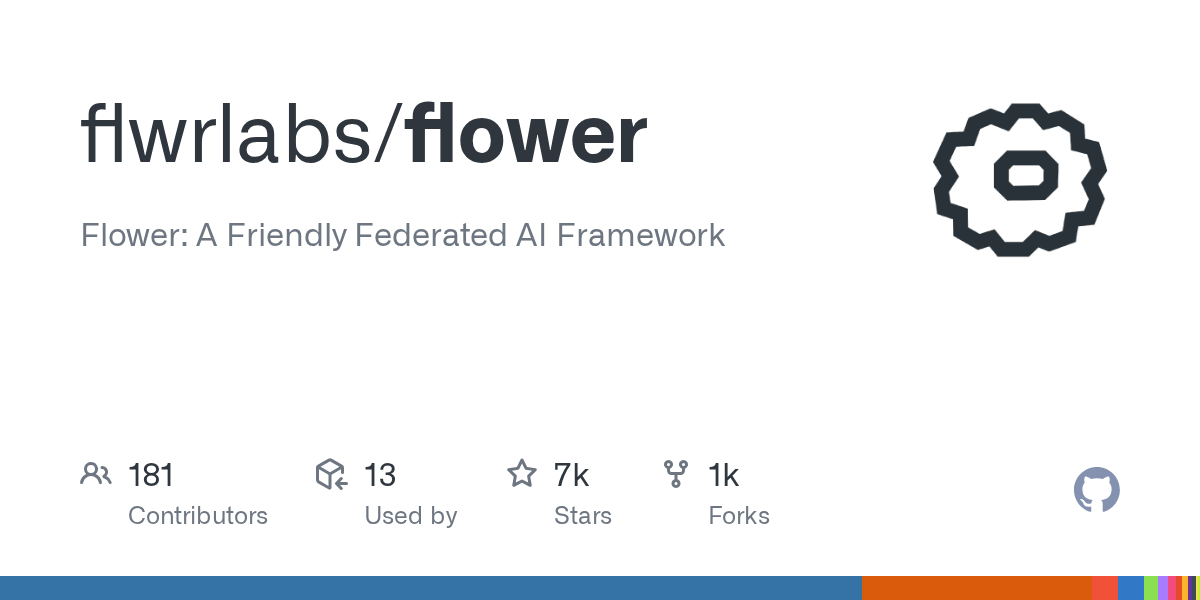
| ⭐ Stars (total) | 6,758 |
| 📈 Star Growth (Mar 20 → Mar 27) | +6,758 |
| 🔥 Star Growth (Mar 26 → Mar 27) | +8 |
| 📈 Trend | Trending |
| 📊 Trend Score | 5406 |
| 💻 Stack | Python |
Overview
Flower is gaining significant attention as a federated learning framework designed to make distributed AI training more accessible to developers. With +6,758 stars gained this week, the Python-based tool is experiencing remarkable growth as organizations seek privacy-preserving alternatives to centralized machine learning approaches.
Key Features
• Framework-agnostic federated learning supporting TensorFlow, PyTorch, and other ML libraries
• Built-in simulation capabilities for testing federated scenarios locally before deployment
• Customizable federation strategies including FedAvg, FedOpt, and custom aggregation algorithms
• Cross-platform compatibility with support for mobile devices, edge computing, and cloud environments
• Privacy-preserving training that keeps data decentralized across participating clients
• Production-ready deployment tools with Docker support and Kubernetes integration
Use Cases
• Healthcare institutions collaborating on medical AI models while keeping patient data on-premises
• Financial services developing fraud detection systems across multiple banks without sharing sensitive transaction data
• Mobile app developers training personalized recommendation models across user devices
• IoT networks improving predictive maintenance models across distributed sensor deployments
• Research consortiums enabling multi-institutional AI studies while maintaining data sovereignty
Why It’s Trending
This tool gained +6,758 stars this week, showing strong momentum in AI frameworks. This suggests increasing developer interest in federated learning approaches as privacy regulations tighten globally. This trend may reflect a broader shift in how teams are building AI systems that need to balance performance with data privacy requirements.
Pros
• Simplifies complex federated learning implementation with intuitive APIs
• Strong community support and comprehensive documentation for getting started
• Flexible architecture allows integration with existing ML workflows and tools
• Active development with regular updates and feature additions from the core team
Cons
• Federated learning inherently involves more complex debugging than centralized training
• Network latency and connectivity issues can impact training performance and reliability
• Limited tooling for monitoring and visualizing federated training progress across distributed clients
Pricing
Flower is open source and completely free to use under the Apache 2.0 license.
Getting Started
Install Flower via pip and follow the quickstart tutorial to set up your first federated learning experiment. The framework includes simulation examples that run locally to help developers understand federated concepts before deploying to real distributed environments.
Insight
The rapid adoption of Flower suggests that privacy-preserving AI is transitioning from academic research to practical implementation. This growth likely reflects increasing pressure from data protection regulations and enterprise security requirements. The timing may be attributed to organizations realizing that federated learning offers a viable path to collaborative AI development without compromising sensitive data ownership.


Comments