📊 Stats & Trend
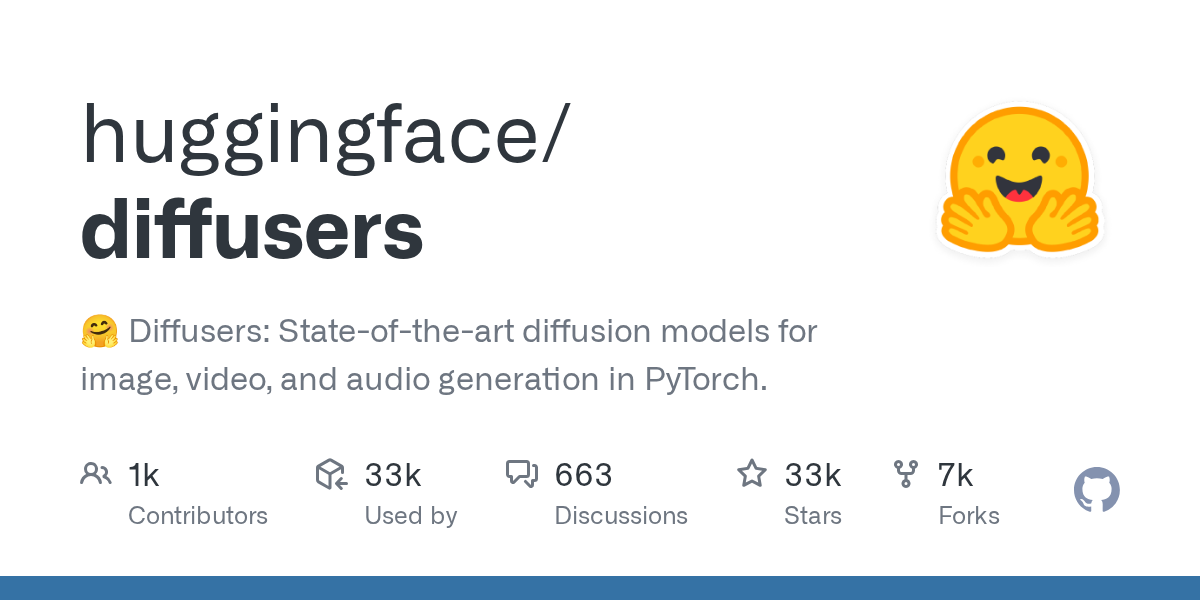
| ⭐ Stars (total) | 33,173 |
| 📈 Star Growth (Mar 20 → Mar 27) | +33,173 |
| 🔥 Star Growth (Mar 26 → Mar 27) | +33,173 |
| 🔥 Trend | Exploding |
| 📊 Trend Score | 26538 |
| 💻 Stack | Python |
Overview
Diffusers has exploded onto the AI development scene with +33,173 GitHub stars this week, establishing itself as a major force in generative AI tooling. This Hugging Face library provides state-of-the-art diffusion models for creating images, video, and audio content using PyTorch, positioning it at the center of the current generative AI boom.
Key Features
• Pre-trained diffusion models for image, video, and audio generation tasks
• Built on PyTorch framework for seamless integration with existing ML workflows
• State-of-the-art model implementations including latest research developments
• Unified API for working with different types of generative diffusion models
• Integration with Hugging Face ecosystem for model sharing and deployment
• Support for custom model training and fine-tuning workflows
Use Cases
• Content creation teams building automated image and video generation pipelines
• AI researchers experimenting with custom diffusion model architectures and training
• Product teams integrating generative AI features into consumer applications
• Game developers creating procedural art assets and dynamic content systems
• Marketing agencies automating visual content production at scale
Why It’s Trending
This tool gained +33,173 stars this week, showing explosive momentum in the AI development space. This surge suggests rapidly increasing developer interest in accessible, production-ready diffusion model implementations. This trend may reflect a broader shift toward democratizing generative AI capabilities, as teams move from experimental prototypes to scalable deployment solutions.
Pros
• Comprehensive library covering multiple generative AI modalities in one package
• Strong backing from Hugging Face with active community development and support
• Production-ready implementations of cutting-edge research models
• Extensive documentation and examples for rapid developer onboarding
Cons
• Requires significant computational resources for model training and inference
• PyTorch dependency may limit adoption for teams standardized on other frameworks
• Complex parameter tuning needed for optimal results across different use cases
Pricing
Free and open source. Compute costs for training and inference depend on chosen cloud infrastructure and model complexity.
Getting Started
Install via pip and access pre-trained models through the Hugging Face model hub. The library includes quickstart tutorials for common generative tasks across image, video, and audio domains.
Insight
The explosive growth pattern suggests that developer demand for production-grade generative AI tools is likely driven by businesses moving beyond proof-of-concept phases. This momentum may reflect the maturation of diffusion model technology from research curiosity to practical business tool. The timing indicates that teams are actively seeking standardized, well-supported libraries as generative AI applications transition from experimental to revenue-generating products.


Comments