📊 Stats & Trend
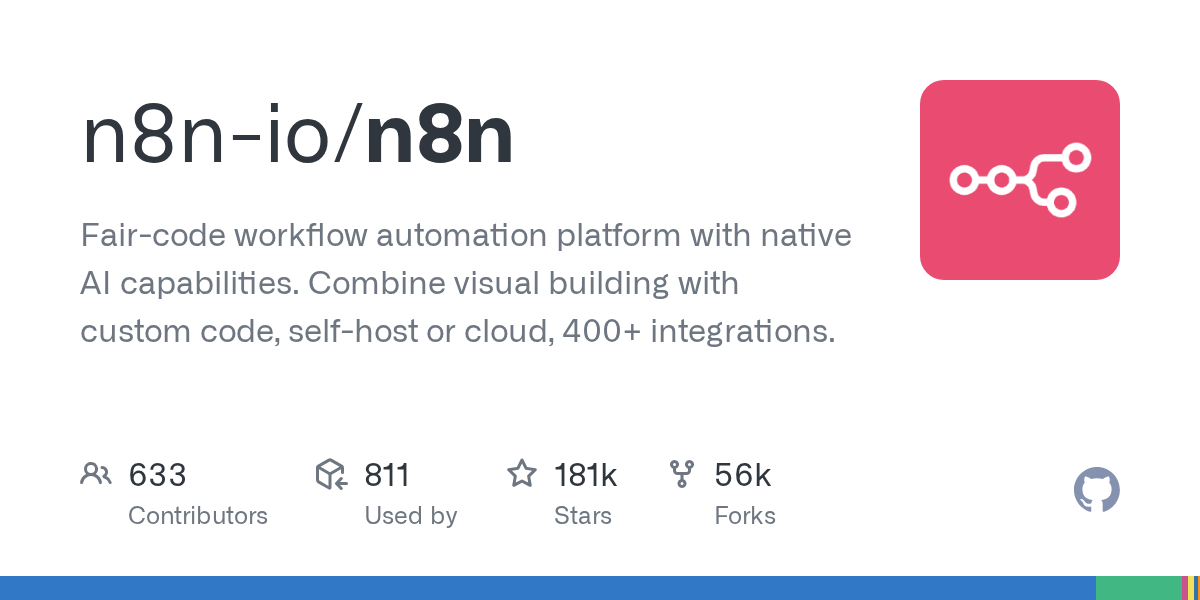
| ⭐ Stars (total) | 181,195 |
| 📈 Star Growth (Mar 20 → Mar 27) | +181,195 |
| 🔥 Star Growth (Mar 26 → Mar 27) | +99 |
| 🔥 Trend | Exploding |
| 📊 Trend Score | 144956 |
| 💻 Stack | TypeScript |
Overview
n8n is experiencing explosive growth with +181,195 stars gained this week, positioning it as a breakout player in the workflow automation space. This fair-code platform combines visual workflow building with native AI capabilities and extensive integrations, attracting developers who want automation without vendor lock-in.
Key Features
• Visual workflow builder with drag-and-drop interface for creating complex automation sequences
• Native AI capabilities integrated directly into workflow nodes and operations
• 400+ pre-built integrations connecting popular services, APIs, and databases
• Custom code execution within workflows using JavaScript and Python
• Self-hosting options alongside managed cloud deployment
• Fair-code licensing model allowing commercial use with source code access
Use Cases
• Data pipeline automation for syncing customer information between CRM, marketing tools, and analytics platforms
• AI-powered content workflows that generate, process, and distribute marketing materials across multiple channels
• Business process automation for invoice processing, approval workflows, and customer onboarding sequences
• API orchestration for connecting microservices and third-party applications in complex integrations
• Lead qualification systems that automatically score, route, and nurture prospects using AI analysis
Why It’s Trending
This tool gained +181,195 stars this week, showing strong momentum in workflow automation with AI integration. This suggests increasing developer interest in platforms that combine visual workflow building with programmatic flexibility and AI capabilities. This trend may reflect a broader shift toward no-code/low-code solutions that don’t sacrifice technical control or data ownership.
Pros
• Fair-code model provides source access while maintaining sustainable business model
• Extensive integration library reduces development time for common workflow patterns
• Self-hosting capability ensures data privacy and customization control
• Native AI features eliminate need for complex external API orchestration
Cons
• Learning curve for complex workflow logic and custom code integration
• Self-hosted deployments require infrastructure management and maintenance
• Resource consumption can be significant for high-volume workflow processing
Pricing
Open source version available for free. Cloud-hosted plans and enterprise features available through paid tiers.
Getting Started
Install via Docker or npm for self-hosting, or sign up for cloud version. The visual editor provides templates and examples for common workflow patterns.
Insight
The explosive growth pattern suggests that developers are actively seeking alternatives to proprietary automation platforms that offer both technical flexibility and AI integration. This momentum likely reflects increasing demand for workflow tools that can incorporate AI capabilities without requiring extensive custom development or vendor dependency. The combination of fair-code licensing and native AI features may indicate a market shift toward more open, developer-friendly automation platforms.


Comments