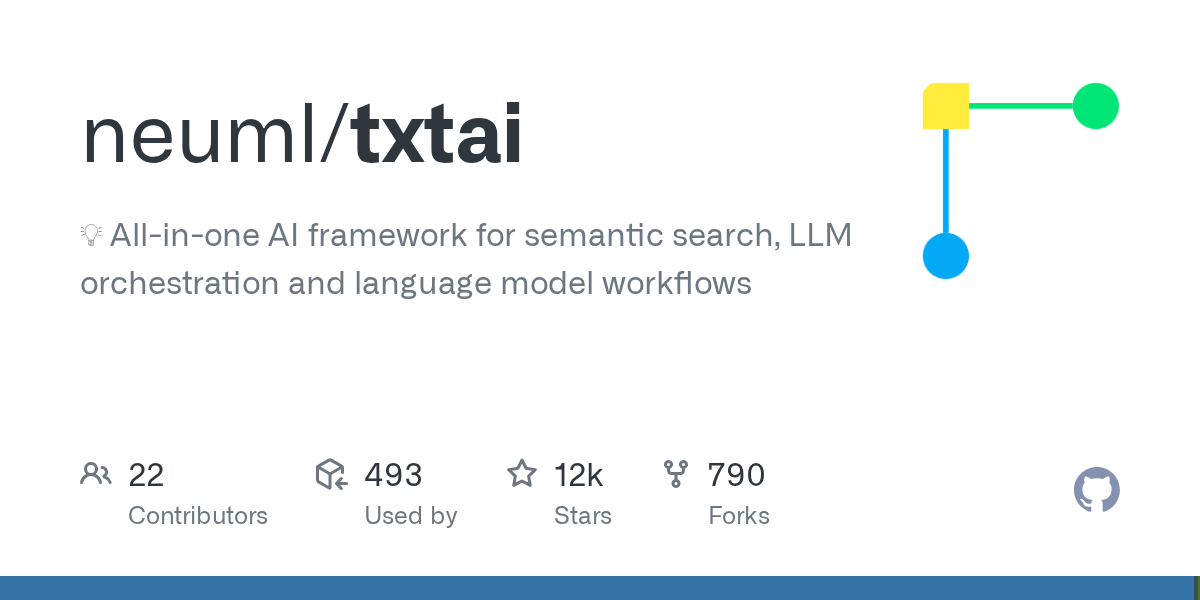
📊 Stats & Trend
| ⭐ Stars (total) | 12,342 |
| 📈 Star Growth (Mar 19 → Mar 26) | +12,342 |
| 🔥 Star Growth (Mar 25 → Mar 26) | +12,342 |
| 🔥 Trend | Exploding |
| 📊 Trend Score | 9874 |
| 💻 Stack | Python |
Overview
txtai is experiencing explosive growth with +12,342 stars gained this week, positioning itself as a comprehensive AI framework that combines semantic search, LLM orchestration, and language model workflows in a single Python package. This all-in-one approach addresses the growing complexity developers face when building AI applications that require multiple components working together.
Key Features
• Semantic search capabilities that go beyond keyword matching to understand meaning and context
• LLM orchestration tools for managing and coordinating multiple language models
• Integrated workflow system for chaining language model operations
• Python-native implementation designed for easy integration into existing codebases
• Framework-agnostic approach that works with various AI models and libraries
• Built-in support for both local and cloud-based language model deployments
Use Cases
• Enterprise knowledge management systems that need intelligent document search and retrieval
• Multi-step AI agents that combine search, reasoning, and content generation capabilities
• Research applications requiring semantic analysis across large document collections
• Customer support platforms that blend semantic search with LLM-powered response generation
• Content recommendation systems that understand user intent beyond simple keyword matching
Why It’s Trending
This tool gained +12,342 stars this week, showing strong momentum in the AI framework space. This suggests increasing developer interest in consolidated solutions that reduce the complexity of building multi-component AI systems. This trend may reflect a broader shift toward integrated platforms as teams seek to streamline their AI development workflows rather than managing multiple specialized tools.
Pros
• Unified framework reduces integration complexity between semantic search and LLM components
• Python-first design aligns with the dominant language in AI development
• All-in-one approach potentially reduces dependency management overhead
• Supports both local and cloud deployments for flexible infrastructure choices
Cons
• Single framework dependency could create vendor lock-in concerns for complex projects
• All-in-one solutions may not match specialized tools for specific use cases
• Documentation and community resources may be limited given its rapid growth phase
Pricing
Open source and free to use. Enterprise support or additional services may be available but are not clearly specified.
Getting Started
Install via pip and follow the Python documentation for basic semantic search and LLM workflow setup. The framework is designed for developers already familiar with Python AI development patterns.
Insight
The explosive growth pattern suggests that developers are increasingly seeking integrated solutions rather than assembling separate tools for semantic search and LLM orchestration. This momentum may reflect growing frustration with the complexity of managing multiple AI components in production environments. The trend indicates that the market is likely moving toward consolidated platforms that can handle the full AI application lifecycle within a single framework.


Comments