📊 Stats & Trend
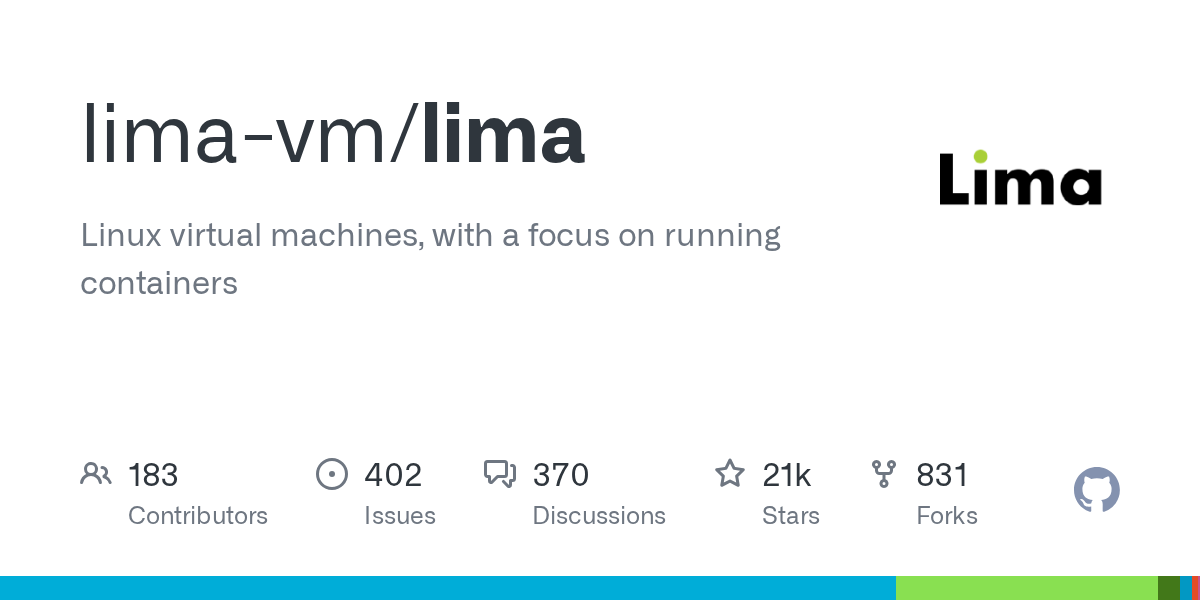
| ⭐ Stars (total) | 20,543 |
| 📈 Star Growth (Mar 19 → Mar 26) | +20,543 |
| 🔥 Star Growth (Mar 25 → Mar 26) | +20,543 |
| 🔥 Trend | Exploding |
| 📊 Trend Score | 16434 |
| 💻 Stack | Go |
Overview
Lima is gaining explosive traction with +20,543 stars this week, positioning itself as a streamlined solution for running Linux virtual machines optimized for container workloads. Built in Go, this tool addresses the growing need for lightweight virtualization that bridges the gap between native Docker development and full VM isolation.
Key Features
• Automatic VM provisioning and management for container-focused Linux environments
• Built-in Docker and containerd integration for seamless container orchestration
• File system sharing between host and guest systems for development workflows
• Port forwarding automation to simplify network access to containerized applications
• Multiple Linux distribution support with pre-configured container runtime environments
• Resource management controls for CPU, memory, and storage allocation
Use Cases
• Mac and Windows developers running Linux containers without Docker Desktop licensing costs
• CI/CD pipelines requiring isolated Linux environments for container builds and testing
• Development teams needing consistent Linux runtime environments across different host operating systems
• Organizations testing container deployments in controlled Linux VM environments before production
• Researchers experimenting with different Linux distributions for containerized workloads
Why It’s Trending
This tool gained +20,543 stars this week, showing explosive momentum in virtualization tools. This suggests increasing developer interest in alternatives to traditional container runtime solutions, particularly as Docker Desktop licensing changes affect enterprise workflows. This trend may reflect a broader shift toward lightweight virtualization approaches that combine VM isolation with container efficiency.
Pros
• Eliminates Docker Desktop dependency while maintaining full container functionality
• Significantly lighter resource footprint compared to traditional VMs
• Seamless integration with existing container development workflows
• Cross-platform compatibility addressing diverse development environments
Cons
• Additional complexity layer compared to native container runtimes
• Performance overhead inherent in virtualization approaches
• Limited to container-focused use cases rather than general-purpose virtualization
Pricing
Open source and completely free to use.
Getting Started
Install Lima through package managers like Homebrew or download releases from GitHub. Launch a pre-configured Linux VM with container runtime using simple CLI commands.
Insight
The explosive growth pattern suggests that lima’s adoption is likely driven by Docker Desktop’s enterprise licensing changes forcing teams to seek alternatives. The timing indicates that organizations may be actively migrating away from traditional solutions toward open-source virtualization approaches. This momentum can be attributed to the tool’s ability to maintain familiar container workflows while providing cost-effective VM isolation, positioning it as a strategic solution for budget-conscious development teams.


Comments