📊 Stats & Trend
| ⭐ Stars (total) | 17,069 |
| 📈 Star Growth (Mar 19 → Mar 26) | +17,069 |
| 🔥 Star Growth (Mar 25 → Mar 26) | +17,069 |
| 🔥 Trend | Exploding |
| 📊 Trend Score | 13655 |
| 💻 Stack | TypeScript |
Overview
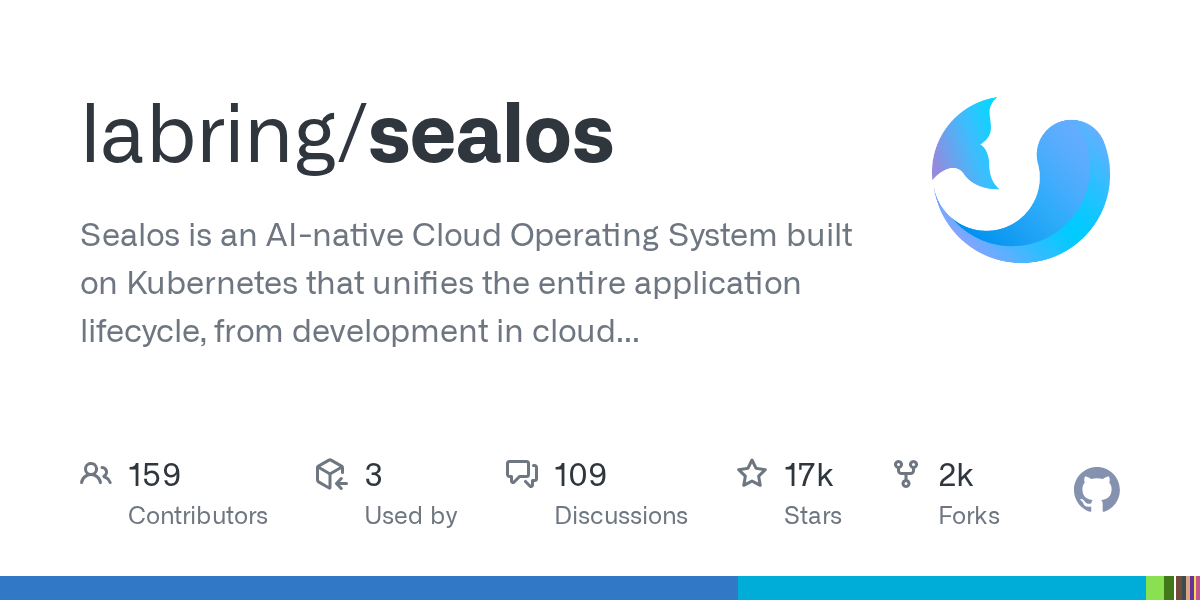
Sealos has exploded onto the developer radar with +17,069 stars this week, positioning itself as an AI-native Cloud Operating System built on Kubernetes. This TypeScript-based platform promises to unify the entire application lifecycle from cloud-based development to production deployment, specifically targeting modern AI applications and complex microservice architectures.
Key Features
• Cloud Operating System built natively on Kubernetes infrastructure
• Integrated cloud IDEs for development directly in the browser
• Managed database services including MySQL, PostgreSQL, Redis, and MongoDB
• Full application lifecycle management from development to production
• Native AI application support and optimization
• Microservice architecture deployment and scaling capabilities
Use Cases
• AI teams building and deploying machine learning models at scale without infrastructure overhead
• Startups needing rapid prototyping environments with integrated databases and compute resources
• Enterprise development teams requiring unified cloud-native development and deployment workflows
• Organizations migrating from traditional infrastructure to Kubernetes-based cloud systems
• Companies building complex microservice architectures with automated scaling requirements
Why It’s Trending
This tool gained +17,069 stars this week, showing strong momentum in AI Infrastructure. This suggests increasing developer interest in platforms that simplify the complexity of Kubernetes while providing AI-native capabilities. This trend may reflect a broader shift toward unified development platforms that eliminate the traditional boundaries between development, deployment, and operations in AI-driven organizations.
Pros
• Eliminates Kubernetes complexity while maintaining full underlying power and flexibility
• Integrated development environment reduces context switching between tools
• Managed database services remove operational overhead for common data stores
• AI-native design addresses specific requirements of modern machine learning workflows
Cons
• Kubernetes dependency may create vendor lock-in concerns for some organizations
• Platform abstraction could limit access to lower-level infrastructure customization
• Relatively new project may lack enterprise-grade support and documentation maturity
Pricing
Open source and free to use. Deployment costs depend on underlying cloud infrastructure resources consumed.
Getting Started
Install Sealos on your Kubernetes cluster or use their cloud offering to begin deploying applications immediately. The platform provides templates for common AI and database workloads.
Insight
The explosive growth suggests that developer teams are actively seeking solutions that bridge the gap between AI development complexity and production deployment reality. This momentum indicates that the market may be moving toward platforms that treat AI workloads as first-class citizens rather than afterthoughts. The trend can be attributed to increasing frustration with cobbling together disparate tools for modern AI development workflows.
Comments