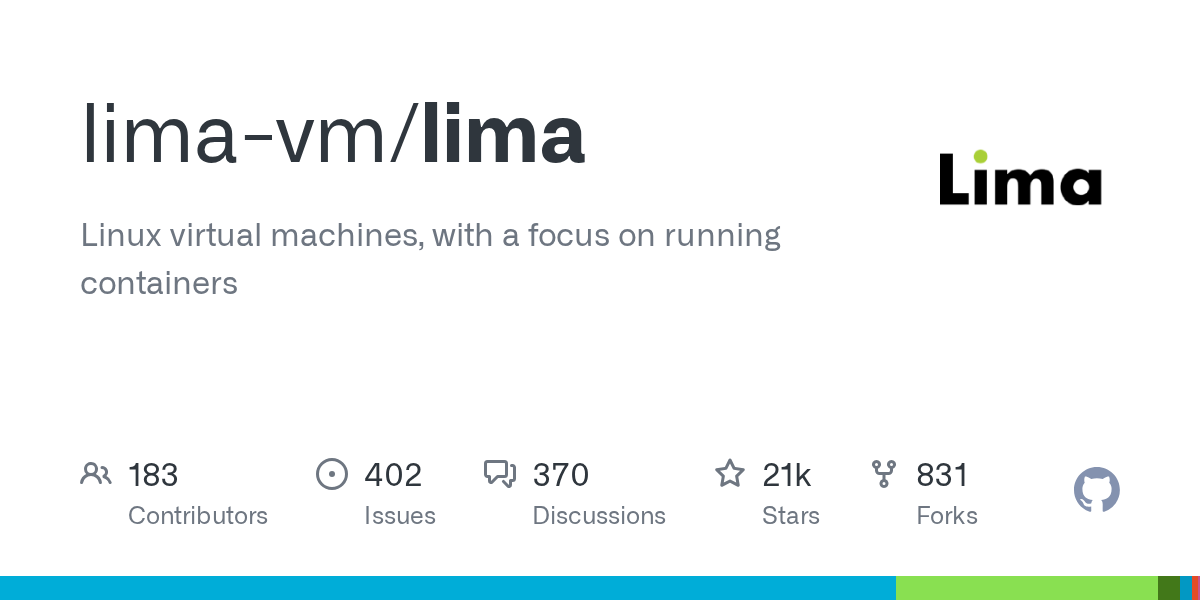
📊 Stats & Trend
| ⭐ Stars (total) | 20,543 |
| 📈 Star Growth (Mar 19 → Mar 26) | +20,543 |
| 🔥 Star Growth (Mar 25 → Mar 26) | +20,543 |
| 🔥 Trend | Exploding |
| 📊 Trend Score | 16434 |
| 💻 Stack | Go |
Overview
Lima is gaining explosive traction with +20,543 stars this week, positioning itself as a streamlined solution for running Linux virtual machines optimized for container workloads. Built in Go, this tool addresses the growing need for lightweight virtualization that bridges the gap between native Linux environments and containerized development workflows.
Key Features
• Lightweight Linux virtual machines specifically designed for container runtime environments
• Native integration with popular container engines and orchestration tools
• Automated VM provisioning and management through command-line interface
• Cross-platform compatibility for running Linux containers on non-Linux host systems
• Resource-efficient virtualization that minimizes overhead compared to traditional VM solutions
• Built-in networking and file system sharing between host and guest environments
Use Cases
• Development teams running Linux containers on macOS or Windows workstations without Docker Desktop overhead
• CI/CD pipelines requiring isolated Linux environments for testing containerized applications
• Organizations needing consistent Linux runtime environments across heterogeneous development machines
• Kubernetes developers testing cluster configurations locally before production deployment
• Security-conscious teams requiring container isolation through virtualization boundaries
Why It’s Trending
This tool gained +20,543 stars this week, showing strong momentum in virtualization and container tooling. This suggests increasing developer interest in lightweight alternatives to traditional container runtime solutions, particularly as teams seek more control over their local development environments. This trend may reflect a broader shift toward decentralized development tooling and reduced dependency on proprietary container platforms.
Pros
• Significantly lower resource consumption compared to full desktop virtualization solutions
• Open source architecture allows for customization and community contributions
• Seamless integration with existing container workflows and development practices
• Cross-platform support eliminates platform-specific container runtime limitations
Cons
• Still requires virtualization capabilities on the host system, limiting compatibility with some hardware
• Additional complexity layer compared to native Linux container execution
• Potential performance overhead despite optimization efforts
Pricing
Free and open source under standard open source licensing.
Getting Started
Install lima through package managers or build from source, then initialize your first Linux VM with container runtime support. The tool provides templates for common container engine configurations to accelerate setup.
Insight
The explosive growth pattern suggests that developers are actively seeking alternatives to established container runtime solutions, likely driven by concerns about vendor lock-in and resource efficiency. This momentum indicates that the market may be shifting toward more granular, specialized tooling rather than monolithic development platforms. The timing of this growth can be attributed to increasing enterprise adoption of hybrid development environments where consistent Linux container behavior across diverse host systems becomes critical.

Comments