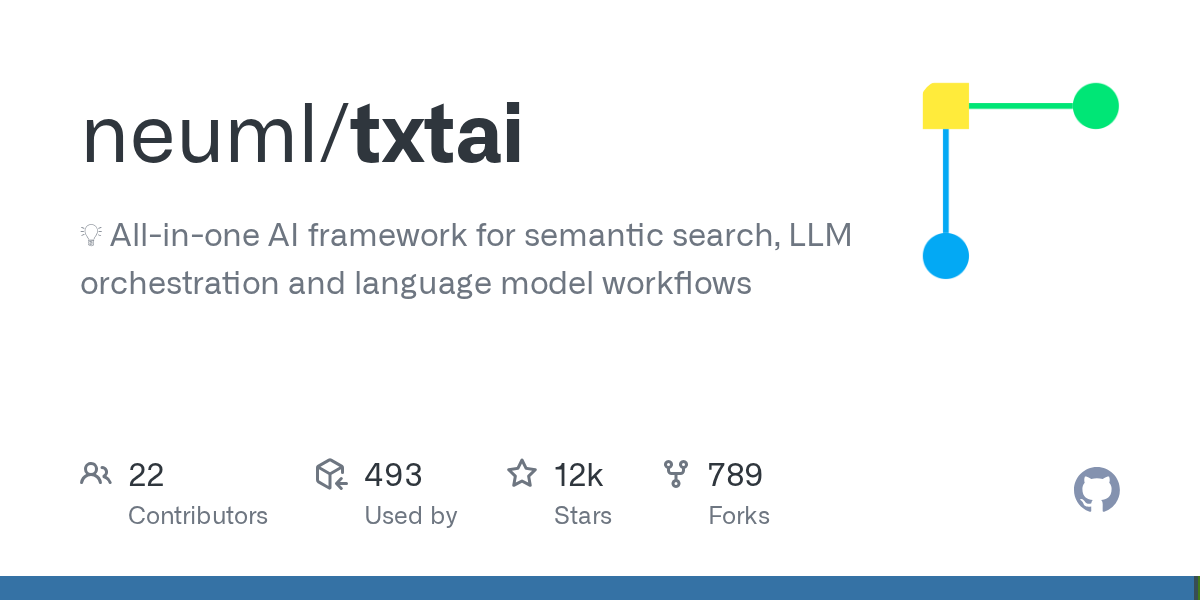
📊 Stats & Trend
| ⭐ Stars (total) | 12,334 |
| 📈 Star Growth (Mar 18 → Mar 25) | +12,334 |
| 🔥 Star Growth (Mar 24 → Mar 25) | +12,334 |
| 🔥 Trend | Exploding |
| 📊 Trend Score | 9867 |
| 💻 Stack | Python |
Overview
txtai is emerging as a comprehensive AI framework that combines semantic search, LLM orchestration, and language model workflows into a single Python package. With explosive growth of +12,334 stars in just one week, this tool is capturing significant developer attention as teams seek unified solutions for complex AI implementations rather than juggling multiple specialized tools.
Key Features
• Semantic search capabilities that go beyond keyword matching to understand context and meaning
• LLM orchestration tools for managing and coordinating multiple language models
• Integrated workflow engine for chaining language model operations
• Python-native implementation for easy integration into existing data science stacks
• All-in-one architecture that reduces the need for multiple AI service dependencies
• Support for building end-to-end language model applications
Use Cases
• Building intelligent search systems that understand user intent rather than just matching keywords
• Creating AI agents that need to orchestrate multiple language models for complex reasoning tasks
• Developing document analysis pipelines that combine retrieval, processing, and generation
• Implementing customer support systems with semantic understanding and automated response generation
• Building research tools that can semantically analyze large document collections
Why It’s Trending
This tool gained +12,334 stars this week, showing strong momentum in AI orchestration frameworks. This suggests increasing developer interest in consolidated AI tooling that reduces integration complexity. This trend may reflect a broader shift toward unified platforms as teams move from experimentation to production AI implementations.
Pros
• Consolidates multiple AI capabilities into a single framework, reducing architectural complexity
• Python-native design fits naturally into existing ML and data science workflows
• Addresses the growing need for semantic search beyond traditional keyword-based approaches
• Provides LLM orchestration capabilities as multi-model applications become more common
Cons
• All-in-one frameworks can become bloated compared to specialized tools for specific tasks
• Newer framework may have less community support and fewer resources compared to established alternatives
• Single dependency for multiple AI functions creates potential vendor lock-in concerns
Pricing
Open source and free to use. No clearly indicated paid tiers or enterprise offerings.
Getting Started
Install via pip and follow the Python documentation to set up semantic search or LLM workflows. The framework provides examples for common AI orchestration patterns.
Insight
The explosive growth pattern suggests that developers are actively seeking consolidated AI frameworks rather than managing multiple specialized tools. This indicates that the AI tooling ecosystem may be maturing toward integrated platforms as teams prioritize operational simplicity. The timing is likely driven by the increasing complexity of production AI systems that require semantic search, model orchestration, and workflow management working together seamlessly.

Comments