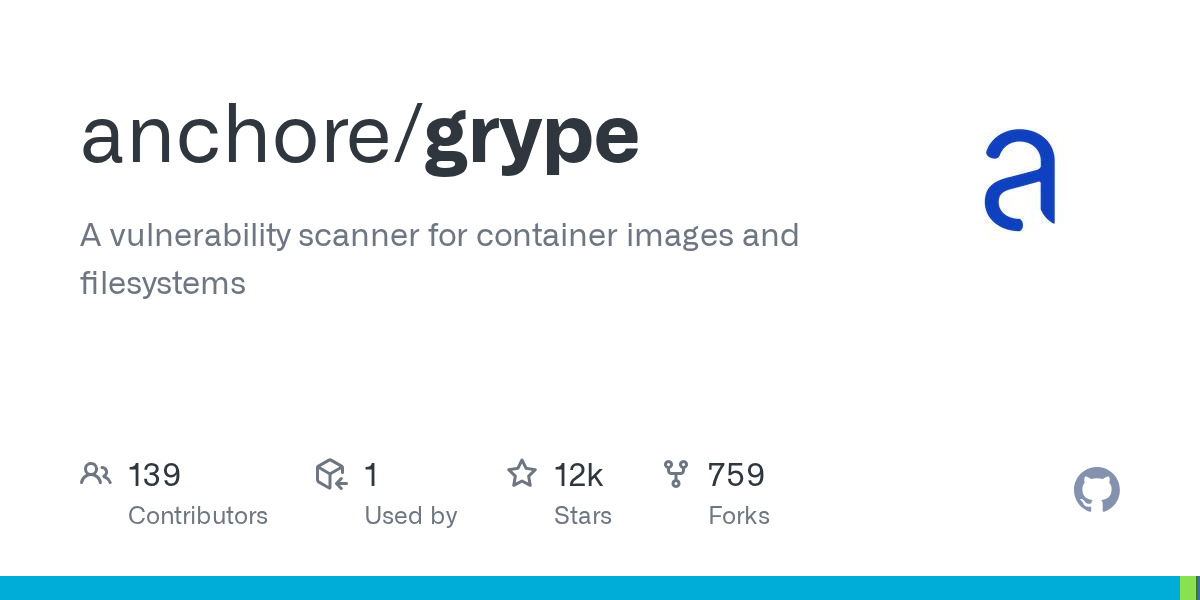
📊 Stats & Trend
| ⭐ Stars (total) | 11,821 |
| 📈 Star Growth (Mar 18 → Mar 25) | +11,821 |
| 🔥 Star Growth (Mar 24 → Mar 25) | +11,821 |
| 🔥 Trend | Exploding |
| 📊 Trend Score | 9457 |
| 💻 Stack | Go |
Overview
Grype is experiencing explosive growth as a vulnerability scanner for container images and filesystems, built in Go. With +11,821 stars gained this week, it represents the surging demand for security-first development tools as containerized applications become the backbone of modern infrastructure.
Key Features
• Scans container images and local filesystems for known security vulnerabilities
• Built in Go for fast performance and easy deployment across platforms
• Integrates with CI/CD pipelines for automated security scanning
• Provides detailed vulnerability reports with severity levels and fix recommendations
• Supports multiple image formats and package managers
• Command-line interface designed for developer workflows
Use Cases
• DevOps teams scanning container images before deployment to production environments
• Security engineers implementing automated vulnerability checks in CI/CD pipelines
• Development teams auditing local filesystems and dependencies for security gaps
• Platform engineering teams building secure container registries with scanning capabilities
• Compliance teams generating security reports for containerized applications
Why It’s Trending
This tool gained +11,821 stars this week, showing strong momentum in security tooling. This suggests increasing developer interest in proactive vulnerability management as container adoption accelerates. This trend may reflect a broader shift in how teams are building with security-by-design principles, prioritizing vulnerability scanning as a core development practice rather than an afterthought.
Pros
• High-performance Go implementation provides fast scanning capabilities
• Designed specifically for modern containerized environments
• Easy integration into existing development and deployment workflows
• Active development with strong community engagement based on growth metrics
Cons
• Limited to vulnerability detection without built-in remediation capabilities
• Requires integration with other tools for complete security pipeline coverage
• May generate false positives that require manual review and filtering
Pricing
Free and open source, available on GitHub with no licensing restrictions for commercial or personal use.
Getting Started
Install grype through package managers or download pre-built binaries, then run scans against container images or local directories using simple command-line syntax.
Insight
The explosive growth pattern suggests that development teams are prioritizing security scanning tools as container security becomes a critical concern. This momentum is likely driven by increasing awareness of supply chain vulnerabilities and regulatory compliance requirements. The trend indicates that vulnerability scanning may be transitioning from specialized security team responsibility to standard developer tooling, reflecting the broader “shift-left” security movement in software development practices.
Comments