📊 Stats & Trend
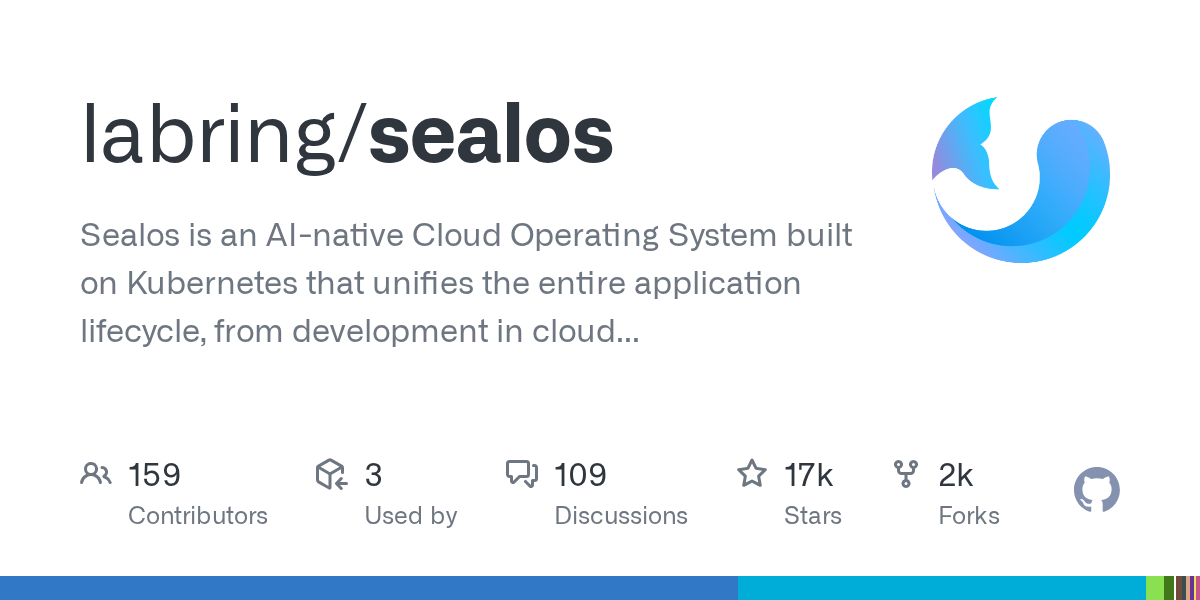
| ⭐ Stars (total) | 17,057 |
| 📈 Star Growth (Mar 18 → Mar 25) | +17,057 |
| 🔥 Star Growth (Mar 24 → Mar 25) | +17,057 |
| 🔥 Trend | Exploding |
| 📊 Trend Score | 13646 |
| 💻 Stack | TypeScript |
Overview
Sealos is experiencing explosive growth as a Kubernetes-based Cloud Operating System designed specifically for AI-native applications. With +17,057 stars gained this week, it’s capturing significant developer attention by promising to unify the entire application lifecycle from cloud-based development to production deployment, particularly for AI applications and managed databases.
Key Features
• Cloud Operating System built on Kubernetes for managing entire application lifecycles
• Integrated cloud IDEs for development directly in the cloud environment
• Managed database support for MySQL, PostgreSQL, Redis, and MongoDB
• AI-native architecture optimized for building and scaling modern AI applications
• Microservice architecture management with unified deployment workflows
• TypeScript-based implementation for modern development practices
Use Cases
• AI application developers building and deploying machine learning models at scale
• Teams managing complex microservice architectures requiring unified orchestration
• Organizations needing managed database solutions integrated with their Kubernetes workflows
• Development teams seeking cloud-native IDEs for collaborative coding
• Companies building AI-powered products requiring seamless development-to-production pipelines
Why It’s Trending
This tool gained +17,057 stars this week, showing strong momentum in AI Infrastructure. This suggests increasing developer interest in unified cloud operating systems that can handle both traditional applications and AI workloads. This trend may reflect a broader shift in how teams are building with AI, moving toward platforms that integrate development environments, deployment, and management into cohesive workflows.
Pros
• Unified platform reduces complexity by combining development, deployment, and management
• AI-native design addresses specific needs of machine learning and AI application development
• Built on Kubernetes leverages proven container orchestration technology
• Integrated managed databases eliminate need for separate database management solutions
Cons
• Kubernetes dependency may create steep learning curve for teams unfamiliar with container orchestration
• Platform lock-in potential as applications become tightly integrated with Sealos ecosystem
• Relatively new project may lack enterprise-grade stability and extensive documentation
Pricing
Open source and free to use. Pricing for hosted or enterprise versions is not clearly specified.
Getting Started
Clone the repository from GitHub and follow the installation documentation for Kubernetes deployment. The platform includes cloud IDE access for immediate development environment setup.
Insight
The explosive growth suggests that developers are seeking more integrated approaches to AI application development and deployment. This momentum indicates that traditional separate tools for development, deployment, and database management may be insufficient for modern AI workflows. The trend can be attributed to increasing complexity in AI application stacks, where unified platforms that handle multiple concerns become more valuable than point solutions.
Comments