📊 Stats & Trend
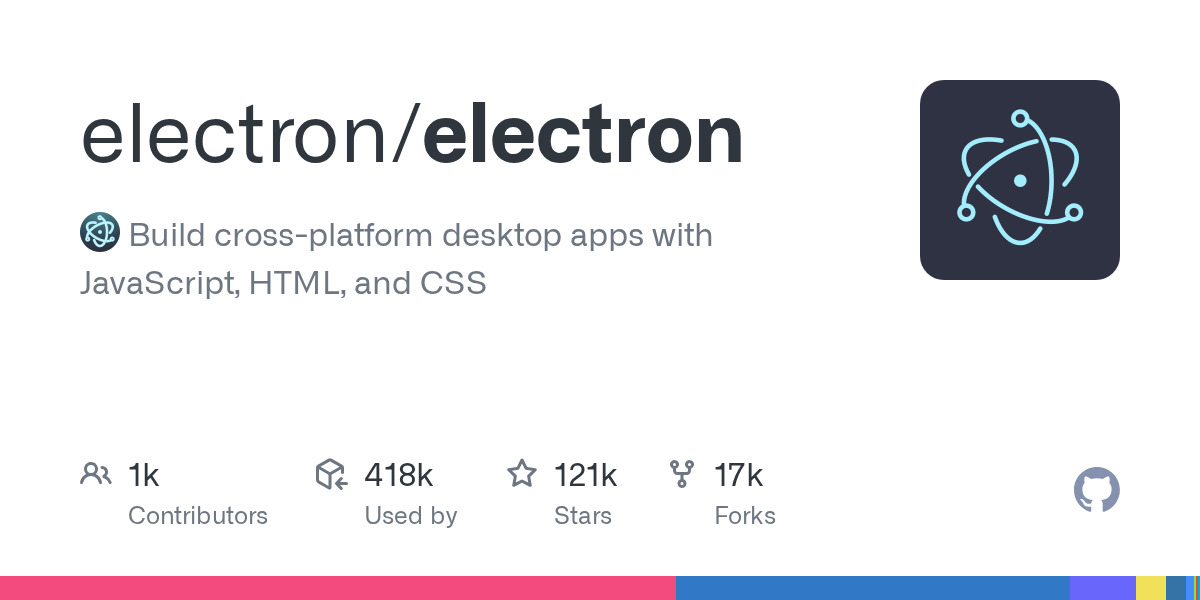
| ⭐ Stars (total) | 120,607 |
| 📈 Star Growth (Mar 17 → Mar 24) | +120,607 |
| 🔥 Star Growth (Mar 23 → Mar 24) | +4 |
| 🔥 Trend | Exploding |
| 📊 Trend Score | 96486 |
| 💻 Stack | C++ |
Overview
Electron is experiencing explosive growth with +120,607 stars gained this week, marking it as a dominant force in cross-platform desktop development. This framework enables developers to build native desktop applications using familiar web technologies like JavaScript, HTML, and CSS, eliminating the need to learn platform-specific languages.
Key Features
• Cross-platform compatibility across Windows, macOS, and Linux from a single codebase
• Native operating system integration including file system access, notifications, and system tray functionality
• Hot reload capabilities for faster development cycles
• Built-in crash reporting and automatic updates system
• Access to Node.js APIs alongside standard web APIs
• Chromium rendering engine for consistent UI behavior across platforms
Use Cases
• Enterprise software companies building internal tools that need to run consistently across different operating systems
• SaaS providers creating offline-capable desktop versions of their web applications
• Development teams migrating existing web applications to desktop without rebuilding from scratch
• Startups requiring rapid prototyping of desktop applications using existing web development skills
• Organizations needing desktop apps with complex UI requirements that benefit from HTML/CSS flexibility
Why It’s Trending
This tool gained +120,607 stars this week, showing strong momentum in cross-platform development tools. This suggests increasing developer interest in unified development approaches that reduce platform-specific complexity. This trend may reflect a broader shift in how teams are building desktop applications, prioritizing development speed and code reuse over native performance optimization.
Pros
• Leverages existing web development skills, reducing learning curve for JavaScript developers
• Significantly faster development cycles compared to native app development across multiple platforms
• Large ecosystem of npm packages and web libraries available for integration
• Strong community support with extensive documentation and third-party resources
Cons
• Higher memory usage and larger application size compared to native alternatives
• Performance limitations for computationally intensive applications
• Security considerations due to Node.js access within the renderer process
Pricing
Free and open source under MIT license with no usage restrictions or paid tiers required.
Getting Started
Install via npm and use the quick-start repository to scaffold a basic application structure. The official documentation provides step-by-step tutorials for building and packaging your first cross-platform desktop app.
Insight
The explosive weekly growth suggests that development teams are increasingly prioritizing rapid deployment over native performance optimization. This momentum likely reflects the growing demand for desktop applications that can be developed and maintained by web development teams without additional platform expertise. The trend indicates that organizations may be shifting toward unified codebases that serve both web and desktop markets simultaneously.


Comments