📊 Stats & Trend
| ⭐ Stars | 3,073 |
| 📈 Weekly Growth | +3,073 |
| 🔥 Today Growth | +3,073 |
| 📈 Trend | Trending |
| 📊 Trend Score | 2458 |
| 💻 Stack | Rust |
Overview
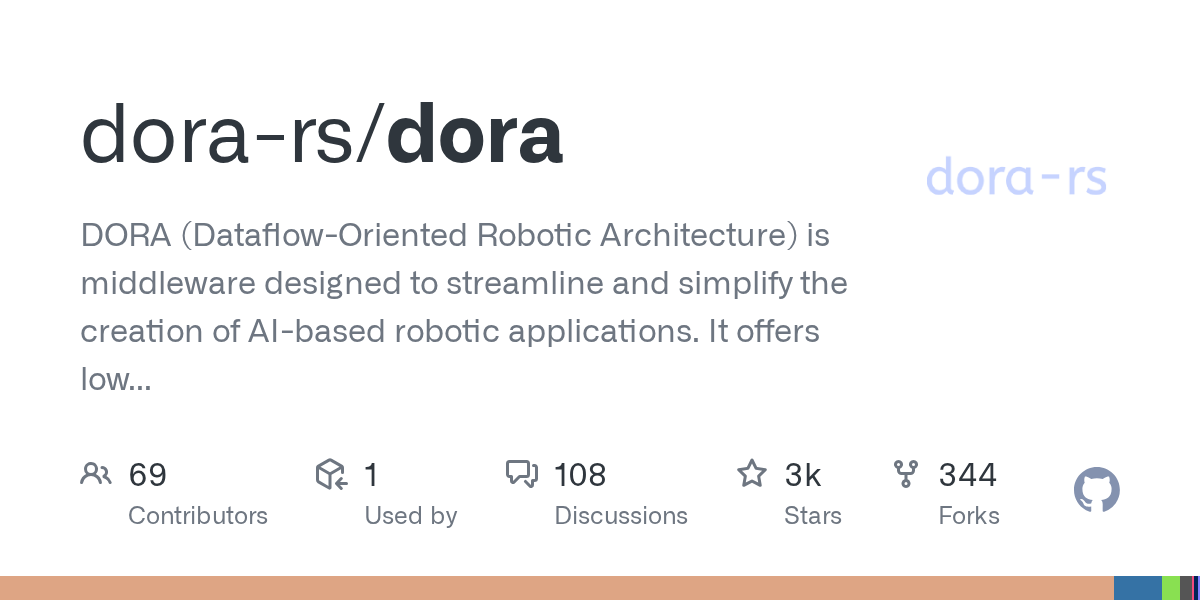
DORA (Dataflow-Oriented Robotic Architecture) is a Rust-based middleware framework that simplifies the development of AI-powered robotic applications through low-latency, distributed dataflow pipelines. The tool has gained significant attention with +3,073 GitHub stars in a single week, positioning itself as an emerging solution for developers building complex robotic systems with AI integration.
Key Features
• Dataflow-oriented architecture that models applications as directed graphs and pipelines
• Low-latency processing capabilities for real-time robotic applications
• Composable design allowing modular development of robotic system components
• Distributed computing support for scaling across multiple nodes and devices
• Built in Rust for memory safety and performance optimization
• Middleware abstraction that simplifies integration between AI models and robotic hardware
Use Cases
• Autonomous vehicle development requiring real-time sensor data processing and decision-making
• Industrial robotics applications with complex multi-sensor fusion and control systems
• Research projects involving distributed robot swarms with coordinated behaviors
• AI-powered manufacturing systems that need low-latency responses to environmental changes
• Drone fleets requiring distributed processing and communication capabilities
Why It’s Trending
This tool gained +3,073 stars this week, showing strong momentum in AI Infrastructure. This suggests increasing developer interest in specialized middleware solutions for robotics and AI integration. This trend may reflect a broader shift toward more sophisticated, performance-oriented frameworks as AI robotics applications mature beyond prototype stages.
Pros
• Rust foundation provides memory safety and high performance for critical robotic applications
• Dataflow architecture enables clear visualization and debugging of complex robotic behaviors
• Distributed processing capabilities support scaling from single robots to fleet deployments
• Low-latency design addresses real-time requirements essential for robotic control systems
Cons
• Rust learning curve may present barriers for developers primarily experienced in Python or C++
• Early-stage project may lack extensive documentation and community resources
• Specialized focus on robotics limits applicability to general-purpose AI applications
Pricing
Open source and free to use under standard GitHub licensing terms.
Getting Started
Access the project through its GitHub repository to explore documentation and example implementations. Developers should have familiarity with Rust and basic robotics concepts to effectively utilize the framework.
Insight
The rapid adoption indicates that developers may be seeking more specialized tools as AI robotics moves from academic research into production environments. This momentum suggests that the intersection of high-performance systems programming and robotics middleware is likely driven by increasing demands for real-time AI processing in physical systems. The choice of Rust as the implementation language can be attributed to the robotics industry’s growing emphasis on safety and performance in mission-critical applications.


Comments