Overview
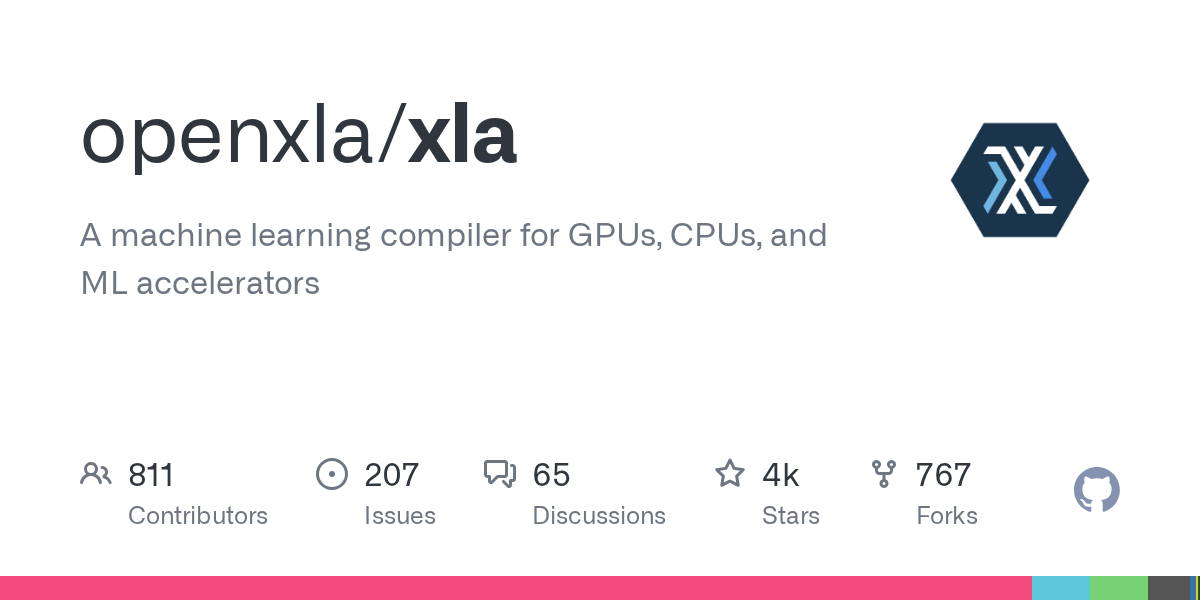
XLA (Accelerated Linear Algebra) is a machine learning compiler designed to optimize computations across GPUs, CPUs, and specialized ML accelerators. With explosive growth momentum this week, this open-source compiler is capturing developer attention as organizations seek to maximize performance from their existing hardware infrastructure without costly upgrades.
Key Features
• Cross-platform compilation that optimizes ML workloads for GPUs, CPUs, and custom accelerators
• Advanced fusion techniques that combine multiple operations into single kernel launches
• Just-in-time compilation that generates optimized machine code at runtime
• Memory layout optimization that reduces data movement and improves cache utilization
• Integration with major ML frameworks through standardized compiler interfaces
• Hardware-agnostic optimization passes that adapt to different accelerator architectures
Use Cases
• Research teams optimizing transformer model training across heterogeneous compute clusters
• Cloud providers building efficient ML inference services that maximize hardware utilization
• Enterprise organizations deploying models on edge devices with limited computational resources
• Hardware manufacturers developing custom accelerators that need compiler support
• ML engineers seeking to reduce training costs by extracting maximum performance from existing infrastructure
Why It’s Trending
This tool gained +4,105 stars this week, showing strong momentum in AI Tools. The surge reflects growing industry demand for compiler-level optimizations as ML workloads become more complex and hardware diversity increases. Organizations are realizing that software optimization can deliver significant performance gains without requiring expensive hardware upgrades.
Pros
• Delivers substantial performance improvements across diverse hardware platforms
• Open-source nature allows for community contributions and custom optimizations
• Mature codebase with backing from major tech companies and research institutions
• Reduces vendor lock-in by providing hardware-agnostic optimization capabilities
Cons
• Steep learning curve requiring deep understanding of compiler internals and ML systems
• C++ implementation may limit accessibility for Python-focused ML practitioners
• Complex integration process that can be challenging for smaller development teams
Pricing
XLA is completely free and open-source under the Apache 2.0 license. There are no paid tiers or commercial versions, making it accessible to organizations of any size.
Getting Started
Developers can clone the repository from GitHub and follow the build instructions for their target platform. Most users will interact with XLA through existing ML framework integrations rather than using it directly, making adoption more straightforward for teams already using supported frameworks.
📊 Trend Stats
- ⭐ Total Stars: 4,105
- 📈 Weekly Growth: +4,105
- 🔥 Today Growth: +4,105
- 📈 Trend: Trending
- 📊 Trend Score: 3284
- 💻 Stack: C++
- 🔗 View Source
Comments