Overview
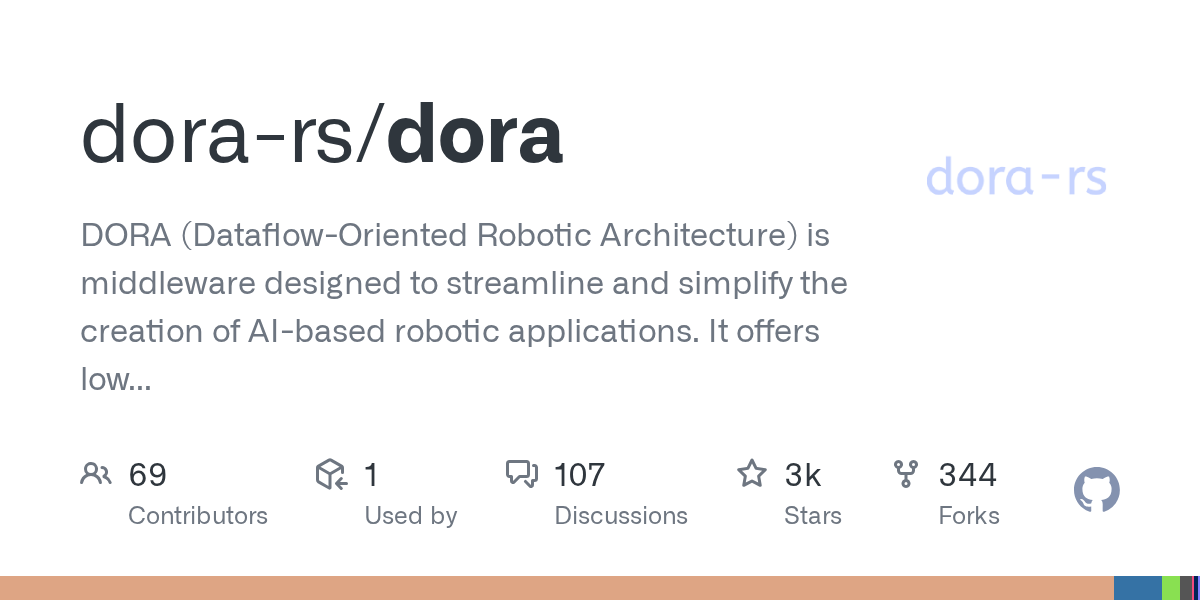
DORA (Dataflow-Oriented Robotic Architecture) is an open-source middleware framework built in Rust that revolutionizes how developers create AI-powered robotic applications through graph-based dataflow pipelines. With its explosive growth momentum and focus on low-latency distributed computing, DORA is positioning itself as critical infrastructure for the next generation of intelligent robotics systems.
Key Features
• Graph-based application modeling – Applications are structured as directed graphs/pipelines for intuitive data flow visualization
• Low-latency dataflow processing – Optimized for real-time robotic applications requiring millisecond response times
• Composable architecture – Modular components can be mixed and matched across different robotic projects
• Distributed computing support – Seamlessly scales across multiple nodes and hardware configurations
• Rust-powered performance – Built on Rust’s memory safety and zero-cost abstractions for maximum efficiency
• AI-native design – Purpose-built to handle machine learning workloads and sensor data fusion
Use Cases
• Autonomous vehicle development – Processing sensor fusion, computer vision, and decision-making pipelines in real-time
• Industrial automation – Coordinating robotic arms, quality control systems, and predictive maintenance workflows
• Research robotics – Rapid prototyping of experimental AI algorithms with standardized data flow patterns
• Drone and UAV systems – Managing flight control, navigation, and payload processing in distributed environments
• Service robotics – Building responsive domestic and commercial robots that integrate multiple AI services
Why It’s Trending
This tool gained +3,066 stars this week, showing strong momentum in AI Infrastructure. The surge reflects growing demand for robust, production-ready robotics middleware as AI applications move from research labs into real-world deployment scenarios. The combination of Rust’s performance advantages and DORA’s dataflow-centric approach addresses critical pain points in robotic system development that existing frameworks haven’t adequately solved.
Pros
• Performance-first design – Rust foundation delivers memory safety without garbage collection overhead
• Developer-friendly architecture – Graph-based modeling makes complex robotic systems easier to visualize and debug
• Production scalability – Distributed architecture supports everything from single robots to fleet management
• Active open-source community – Rapid development pace with transparent roadmap and contributor engagement
Cons
• Rust learning curve – Developers unfamiliar with Rust may face initial adoption barriers
• Early-stage ecosystem – Limited third-party integrations compared to established robotics frameworks
• Documentation gaps – As a rapidly growing project, some advanced features may lack comprehensive guides
Pricing
DORA is completely free and open-source under the Apache 2.0 license. All features are available without restrictions, and the source code can be modified for custom implementations.
Getting Started
Clone the GitHub repository and follow the installation guide to set up your first dataflow pipeline. The project includes example applications demonstrating basic robotics workflows that can serve as starting points for your own AI-powered robotic systems.
📊 Trend Stats
- ⭐ Total Stars: 3,066
- 📈 Weekly Growth: +3,066
- 🔥 Today Growth: +3,066
- 📈 Trend: Trending
- 📊 Trend Score: 2453
- 💻 Stack: Rust
- 🔗 View Source


Comments